Start with the terms
Aizome means indigo dyeing. The word describes the colorant and dyeing process rather than one pattern. Shibori is a broad family of resist techniques: cloth is folded, bound, stitched, clamped, wrapped, or compressed so dye reaches some areas more readily than others. Shibori can be used with indigo, but the two words are not interchangeable.
Why indigo seems to turn blue in the air
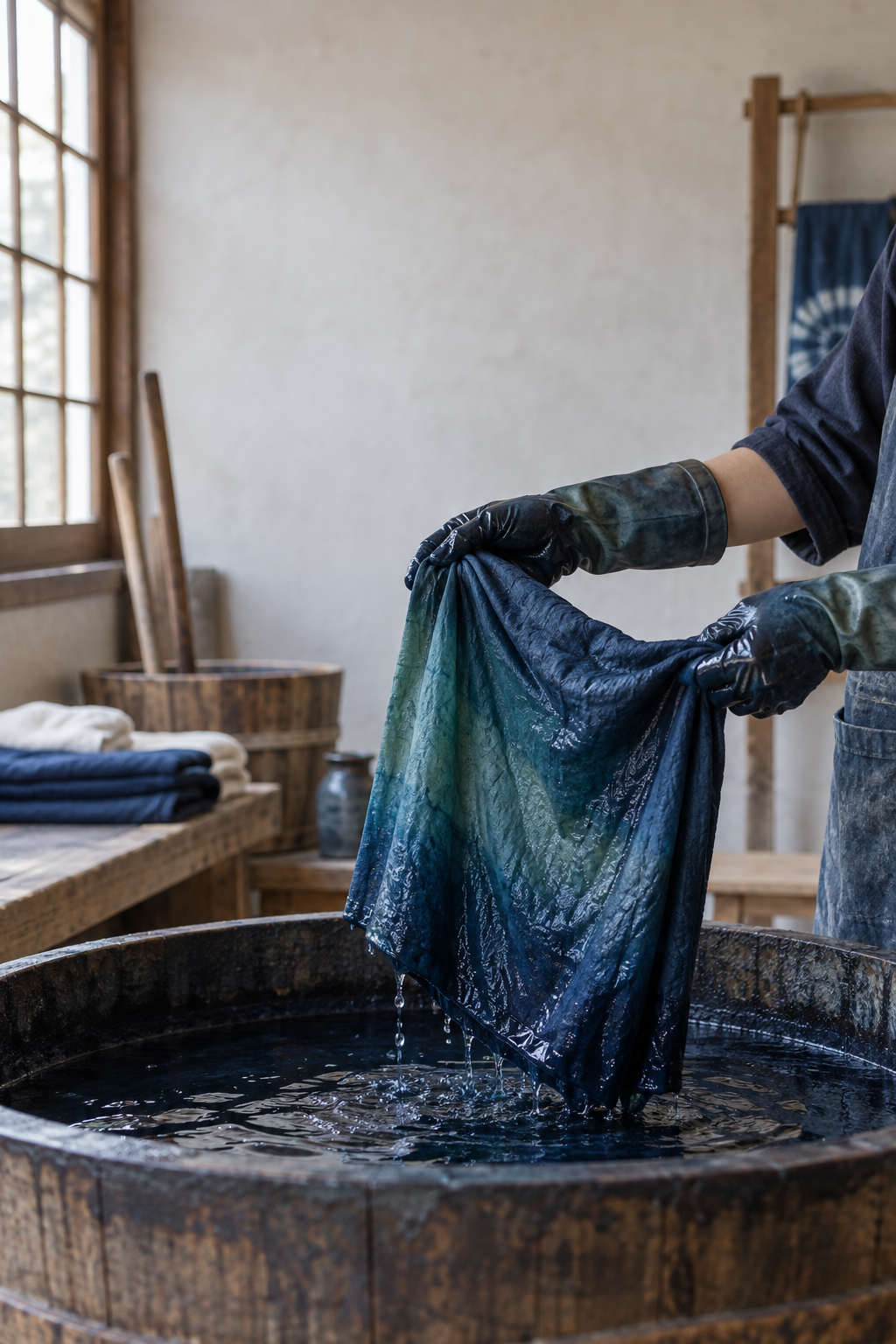
In an indigo vat, the colorant must be changed into a soluble form so it can enter the fiber. Cloth may look greenish when first lifted. Exposure to oxygen converts the colorant back into its blue, insoluble form. Repeated dipping and oxidation can build a deeper shade. Traditional Japanese fermentation vats and modern beginner kits may use different ingredients and preparation methods, so follow the instructions for the exact dye system you purchased.
Three approachable resist methods
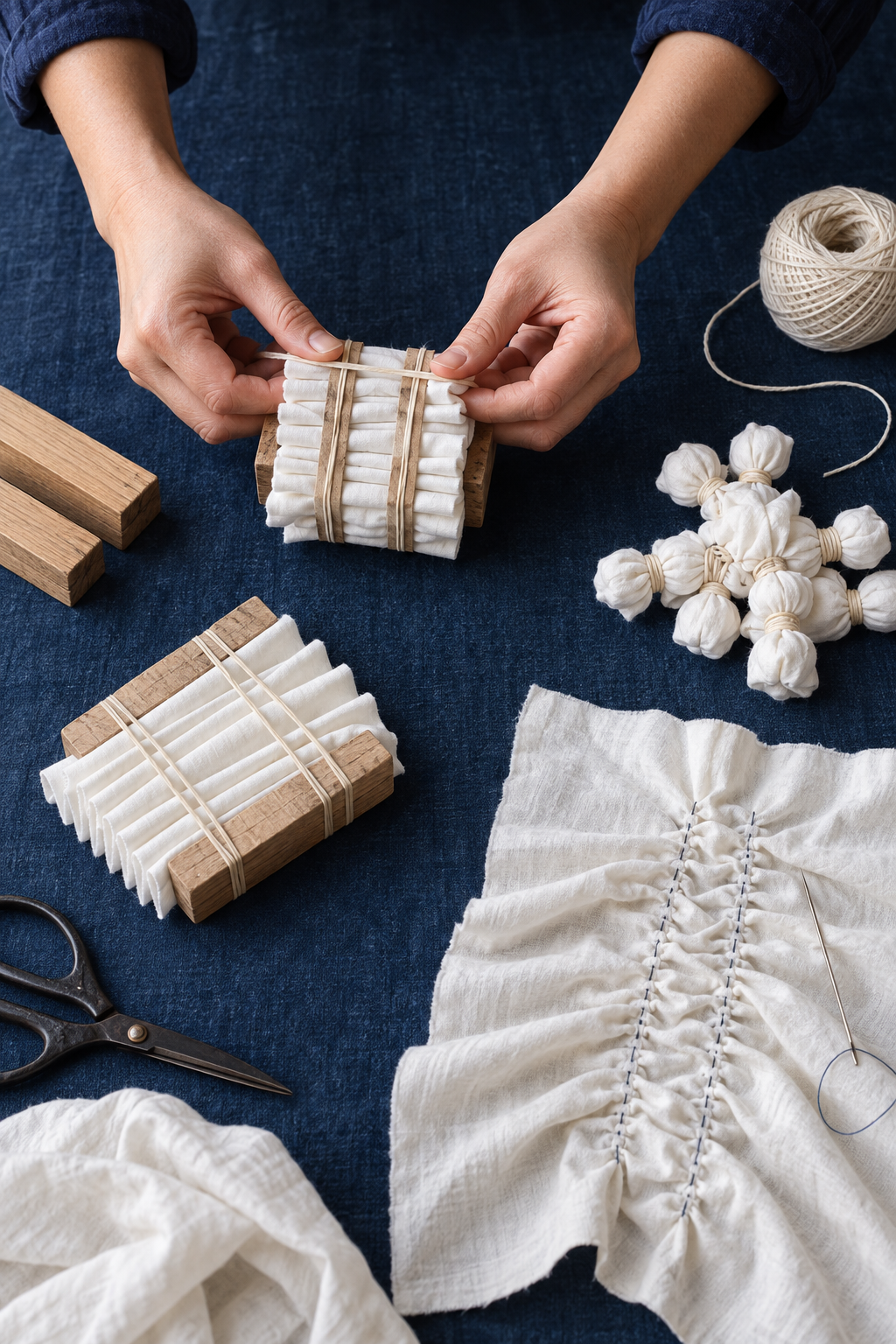
AI-generated educational image. Binding details are illustrative; follow the kit maker’s safety and process instructions.
Itajime-inspired geometry
Accordion-fold cloth, place blocks on both sides, and bind firmly. The exposed edges accept more dye while compressed areas remain lighter.
Bound circles
Pinch small sections and bind them. Wider spacing and stronger binding usually create larger, clearer rings.
Soft linear texture
Sew running stitches, pull the thread to gather the cloth, and secure it before dyeing. This takes longer but offers more control.
Choose the cloth before the pattern
Start with a small, washable piece of cellulose fiber such as cotton or linen if your kit specifies those fibers. Wash it first to remove finishes that can block dye. Dense seams, synthetic blends, stain-resistant treatments, and unknown coatings can produce uneven results. A handkerchief or small cloth is easier to submerge, turn, rinse, and evaluate than a large garment.
Safety and cleanup
- Read the complete manufacturer instructions before opening dye or reducing agents.
- Work in the ventilation and protective equipment specified by the maker.
- Use dedicated containers and tools; do not return them to food preparation.
- Protect skin, clothing, and nearby porous surfaces.
- Keep powders away from drafts and avoid breathing dust.
- Follow local disposal guidance and the product label. “Natural” does not mean risk-free.
Two beginner-kit approaches
Indigo & Shibori Natural Dye Kit
The Amazon listing presents this as an indigo-and-shibori kit intended for a complete home project. Check the current package contents, fiber guidance, protective-equipment requirements, and the seller before ordering.
Important: The phrase “natural dye” does not remove the need to follow chemical-handling and disposal instructions.
Check the kit on AmazonJacquard Tie Dye Indigo Kit
A compact indigo kit from an established dye-supply brand. It is a practical option for testing folds and bindings on small cotton pieces before attempting a garment.
Check before buying: Confirm the current included ingredients and instructions. This home kit should not be described as the same process as a traditional Japanese fermented indigo vat.
Check the Jacquard kit on AmazonWhat a first result can teach you
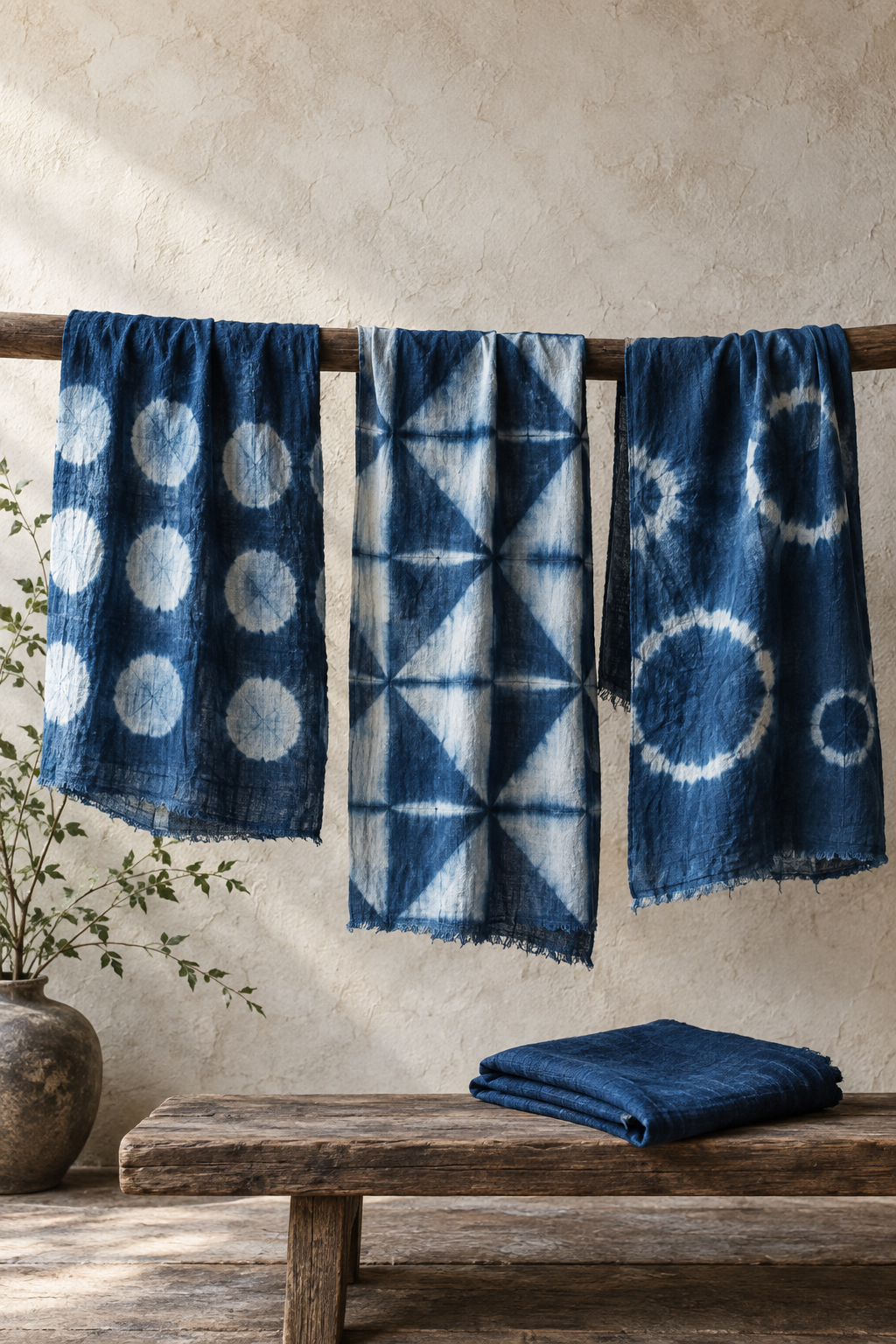
AI-generated editorial visualization; not a product photograph or an authenticated historic textile.
Do not judge only by perfect symmetry. Look at whether the cloth was prepared evenly, whether the bindings resisted dye as intended, and whether rinsing stopped loose color from transferring. Record the fold, binding pressure, dip time, oxidation time, and number of dips. One small controlled sample gives you more useful information than an oversized first project with too many variables.
Affiliate disclosure: As an Amazon Associate I earn from qualifying purchases.