01 — Meaning
The repair becomes part of the object
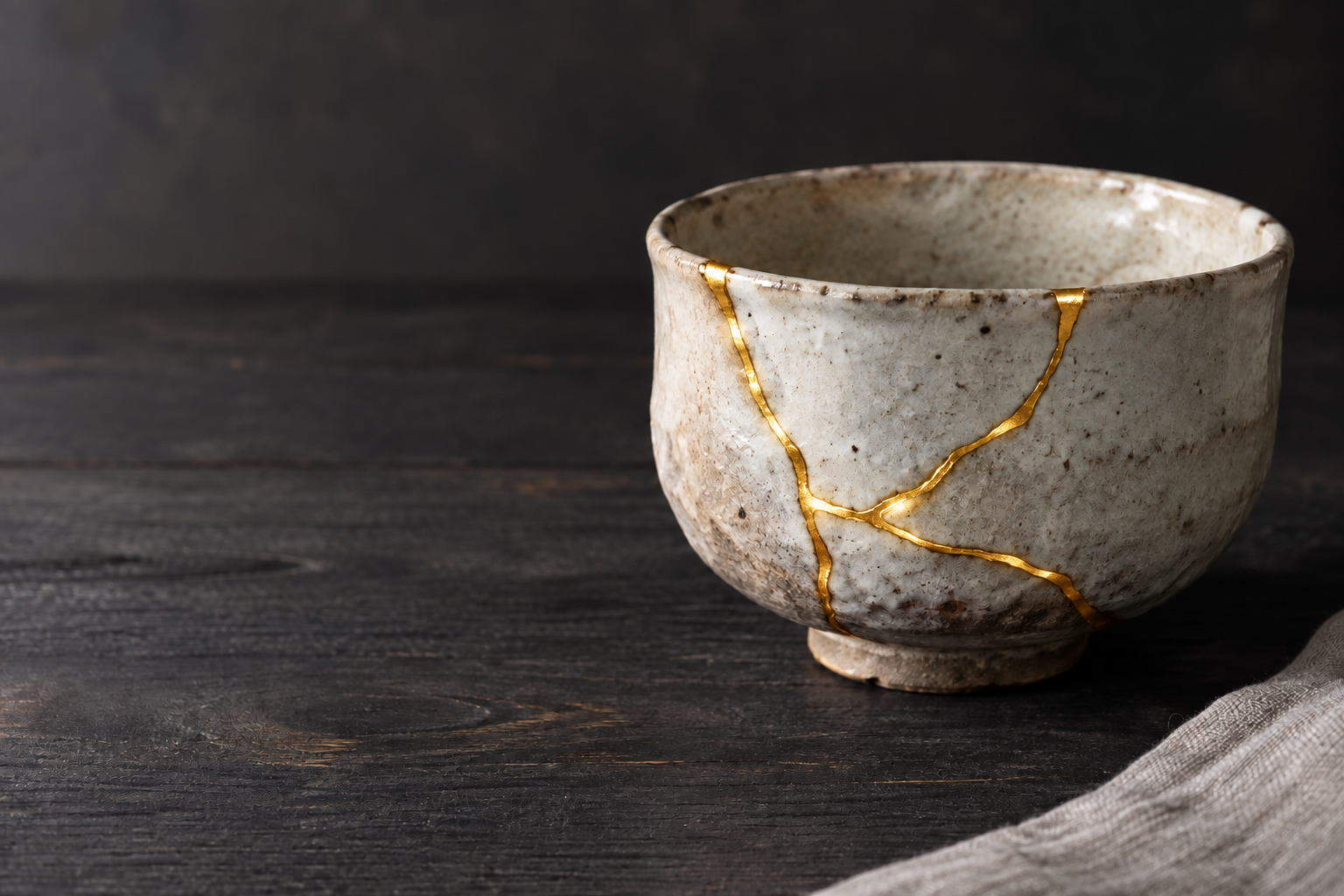
Kintsugi can be translated as “golden joinery.” In the traditional method, broken ceramic pieces are joined with Japanese lacquer, or urushi, and the seams are finished with gold or silver powder.
Instead of trying to erase the break, the repair creates a new visible landscape across the vessel. Kintsugi is often discussed alongside the appreciation of imperfection found in Japanese tea culture, but it is also a demanding material craft.
02 — Know the difference
“Kintsugi kit” can describe very different materials
Most beginners encounter one of three approaches. The best choice depends on whether you want the visual effect, a practical repair, or the traditional process itself.
Decorative epoxy kit
Usually combines two-part adhesive with gold-colored mica or pigment. It is approachable and quick, but it is not traditional urushi kintsugi.
- Good for display objects and first experiments
- Often the lowest-cost option
- Do not assume it is suitable for food contact
Natural urushi kit
Uses lacquer derived from tree sap as an adhesive and coating. The layered process takes patience and careful handling.
- Closest to the traditional technique
- May include real gold or a substitute powder
- Uncured urushi can irritate skin
Alternative resin kit
Some kits use plant-based or synthetic resins. Their curing time, finish and stated uses vary, so the maker’s instructions matter.
- Can be easier than natural lacquer
- Materials differ widely between brands
- Check every safety claim at the source
03 — Before you buy
Five checks for a beginner kit
- 01What is the adhesive?
Look for the actual material name—not only the word “kintsugi.”
- 02What is the gold-colored powder?
Real gold, brass and mica are different materials with different prices and uses.
- 03Is food contact explicitly addressed?
Never infer food safety from “non-toxic.” Follow the exact maker guidance for the full repaired system.
- 04How long does curing take?
A quick craft repair and a layered urushi repair require very different amounts of time.
- 05Are instructions and protective supplies included?
Gloves, brushes, mixing tools and clear English instructions can matter more than decorative extras.
04 — Shopping guide
The comparison we will use
| Kit type | Best for | Typical commitment | Main caution | Product picks |
|---|---|---|---|---|
| Decorative epoxy | First project or display piece | Hours to days | Food-contact claims vary | Coming after verification |
| Alternative resin | Easier nontraditional repair | Days | Read the material list | Coming after verification |
| Natural urushi | Learning the traditional method | Weeks | Skin irritation while uncured | Coming after verification |
Affiliate disclosure: As an Amazon Associate I earn from qualifying purchases. Product links will be added only after current specifications have been checked.
Sources & method
Built from published sources—not pretend testing
This guide explains documented materials and methods. We do not claim hands-on testing where none occurred. Product details will be checked against current manufacturer and Amazon listings before publication.