The short answer
A repaired bowl is not automatically suitable for food just because a kit says “kintsugi,” “natural” or “non-toxic.” In the United States, food-contact safety concerns a material’s specific intended use and the conditions in which it contacts food. A claim about one ingredient does not automatically describe the finished repair.
Why the exact use matters
The U.S. Food and Drug Administration evaluates food-contact substances with their intended use in mind. Food type, temperature and duration of contact can change the relevant conditions. That is why “safe after curing” without a stated use is not enough information for a cup, bowl or serving dish.
Traditional urushi and modern epoxy are not interchangeable
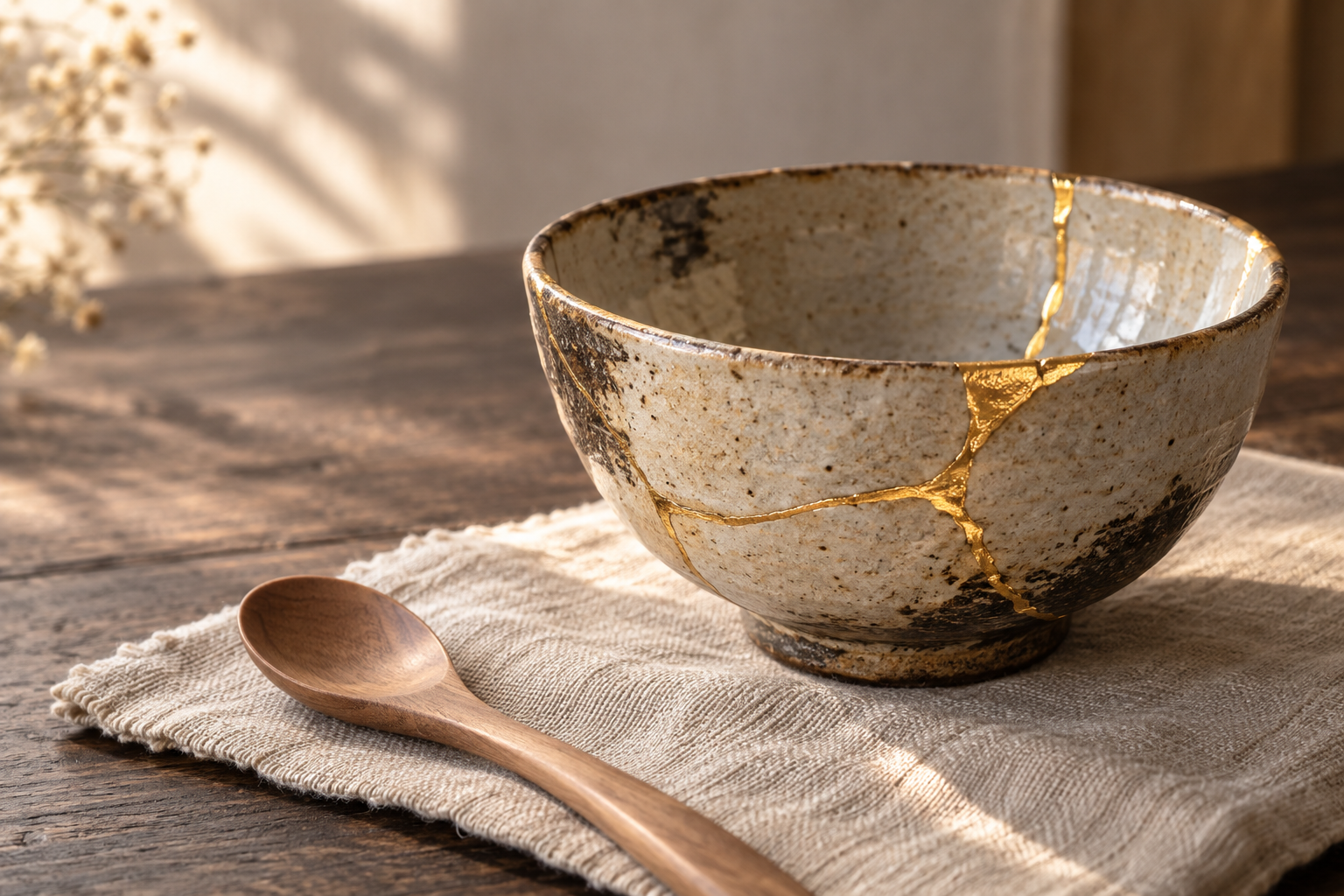
Traditional kintsugi uses layers of urushi lacquer and may finish the seam with metal powder. Many modern kits instead use a two-part epoxy or another resin with gold-colored pigment. Their labels, curing requirements and supported uses differ. Do not transfer a statement about traditional lacquer to an epoxy kit—or the reverse.
Five claims to read carefully
- “Non-toxic” — Ask whether this refers to an ingredient, the cured adhesive or the finished repair.
- “Food safe” — Look for the exact intended use, curing time and limitations.
- “Natural” — Natural origin alone does not establish suitability for every use.
- “FDA approved” — Check what substance, manufacturer and conditions the claim actually covers. FDA authorizations can be use-specific.
- “Dishwasher safe” — This is a durability claim that needs its own explicit support; do not infer it from food-contact wording.
Questions to answer before using the piece
- What are the adhesive, filler and metallic or mica powder?
- Does the maker address the complete repaired surface?
- Has the full stated curing time passed?
- Are hot liquids, acidic foods, oils or alcohol excluded?
- Are microwave, dishwasher or soaking uses excluded?
- Is the repaired line located where food or lips will contact it?
When decorative use is the clearer choice
If a kit provides no precise food-contact instructions, the simplest option is to use the repaired vessel as a display object, planter, dry-item holder or decorative container. This preserves the visual appeal without inventing a safety assurance the maker did not provide.
Affiliate disclosure: As an Amazon Associate I earn from qualifying purchases. Product links will be added only after current specifications and intended-use statements have been verified.
Sources