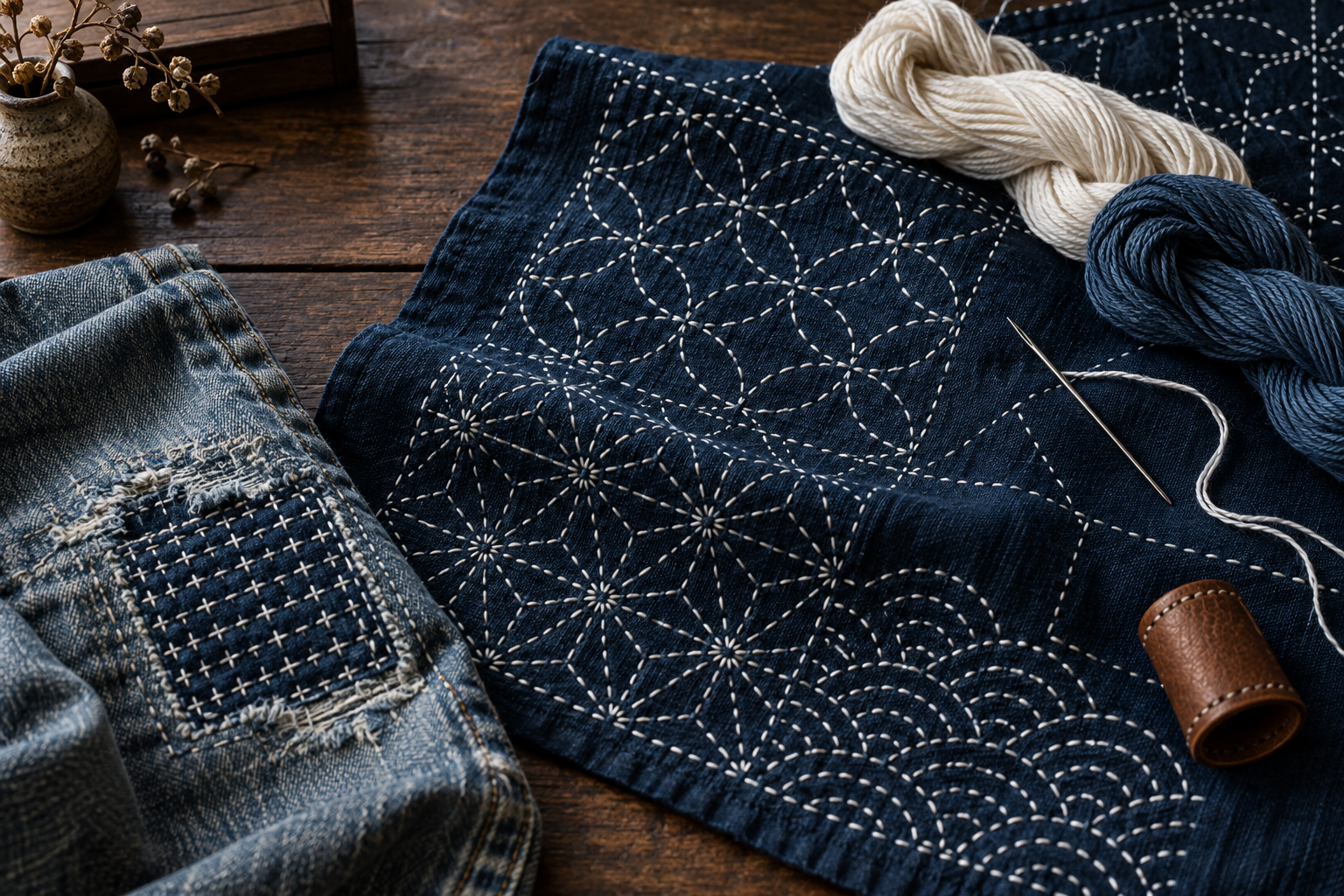
Repair first, decorate second
Visible mending uses contrasting thread and deliberate stitching instead of trying to hide a repair. For worn denim or sturdy cotton, place a patch beyond the weakened area so the stitches anchor into sound fabric. A beautiful pattern cannot stabilize cloth that continues to tear outside the patch.
From necessity to a visible design language
Reinforcing worn work clothing and padded garments helped cloth remain useful. Today, makers often draw on sashiko's repeated running stitches for deliberate visible repairs. The image below is a historically inspired visualization of a patched padded vest; it is not a documentary photograph or an exact reconstruction of one period or region.
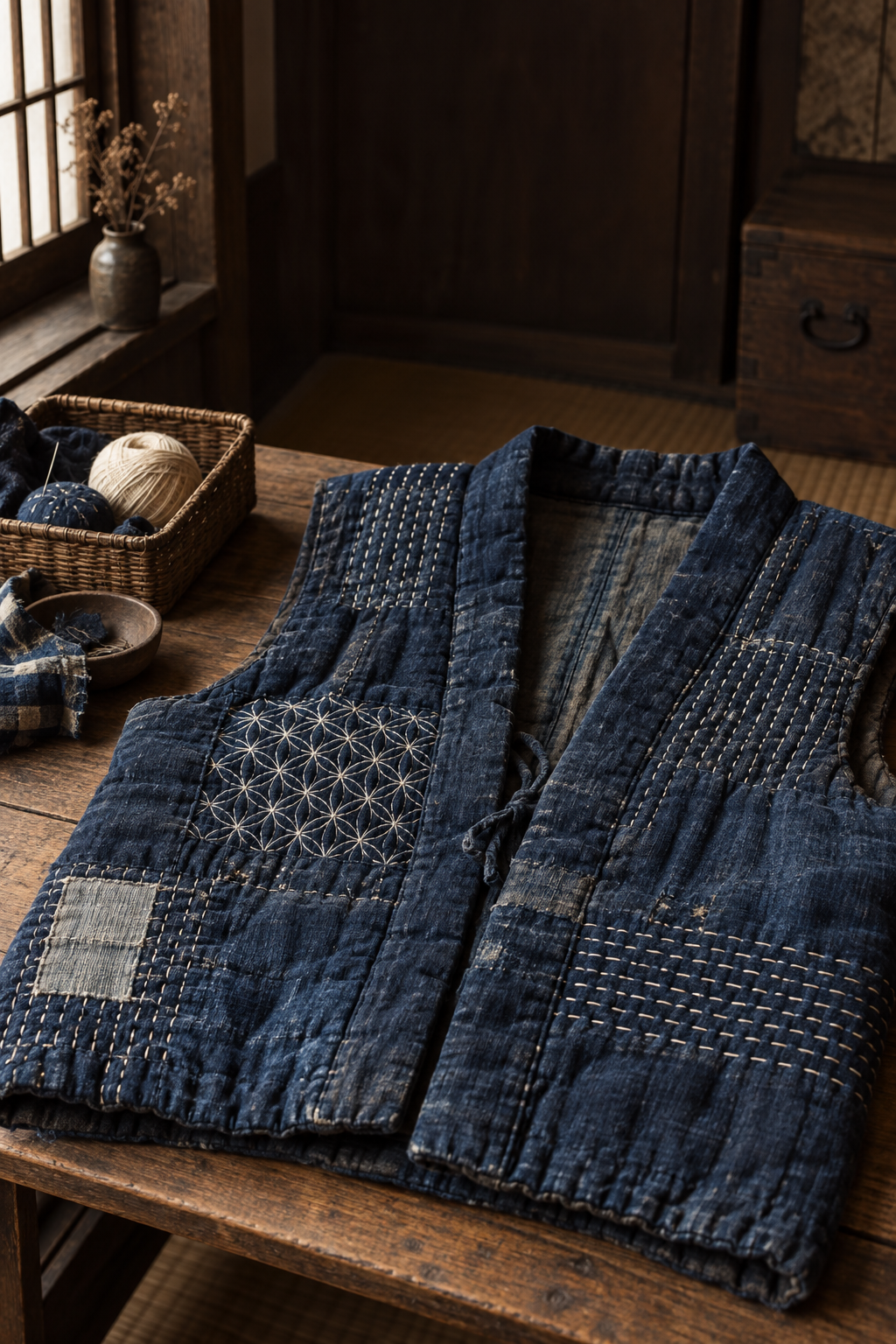
AI-generated, historically inspired editorial visualization; not documentary evidence or a product photograph.
A simple workflow
- Wash and dry the garment before measuring the damage.
- Trim only loose threads that interfere with the repair.
- Cut a patch larger than the weak area and round sharp corners.
- Baste or secure the patch so it cannot shift.
- Mark a simple grid or pattern with a removable fabric marker.
- Stitch without pulling so tightly that the garment puckers.
Choose supplies for the fabric
A long sashiko needle and thick cotton thread work well for many sturdy woven fabrics, but several heavy layers can become difficult to pierce. Test the needle, thread, and marking tool on a hidden area or scrap first. Stretch knits and waterproof technical fabrics need different repair methods.
Common beginner problems
Thread pulled too tight
Leave enough ease for the cloth to lie flat and move naturally.
Patch too small
Extend reinforcement beyond the visibly damaged fibers.
Design too complex
Begin with parallel lines or a simple grid before curves and layered geometry.
When not to use this method
Do not rely on decorative hand stitching for protective workwear, safety equipment, heavily elastic fabric, or damage whose failure could cause injury. Those items may require a manufacturer-approved repair or replacement.
Affiliate disclosure: As an Amazon Associate I earn from qualifying purchases. Product links will be added after current specifications are checked.