The short answer
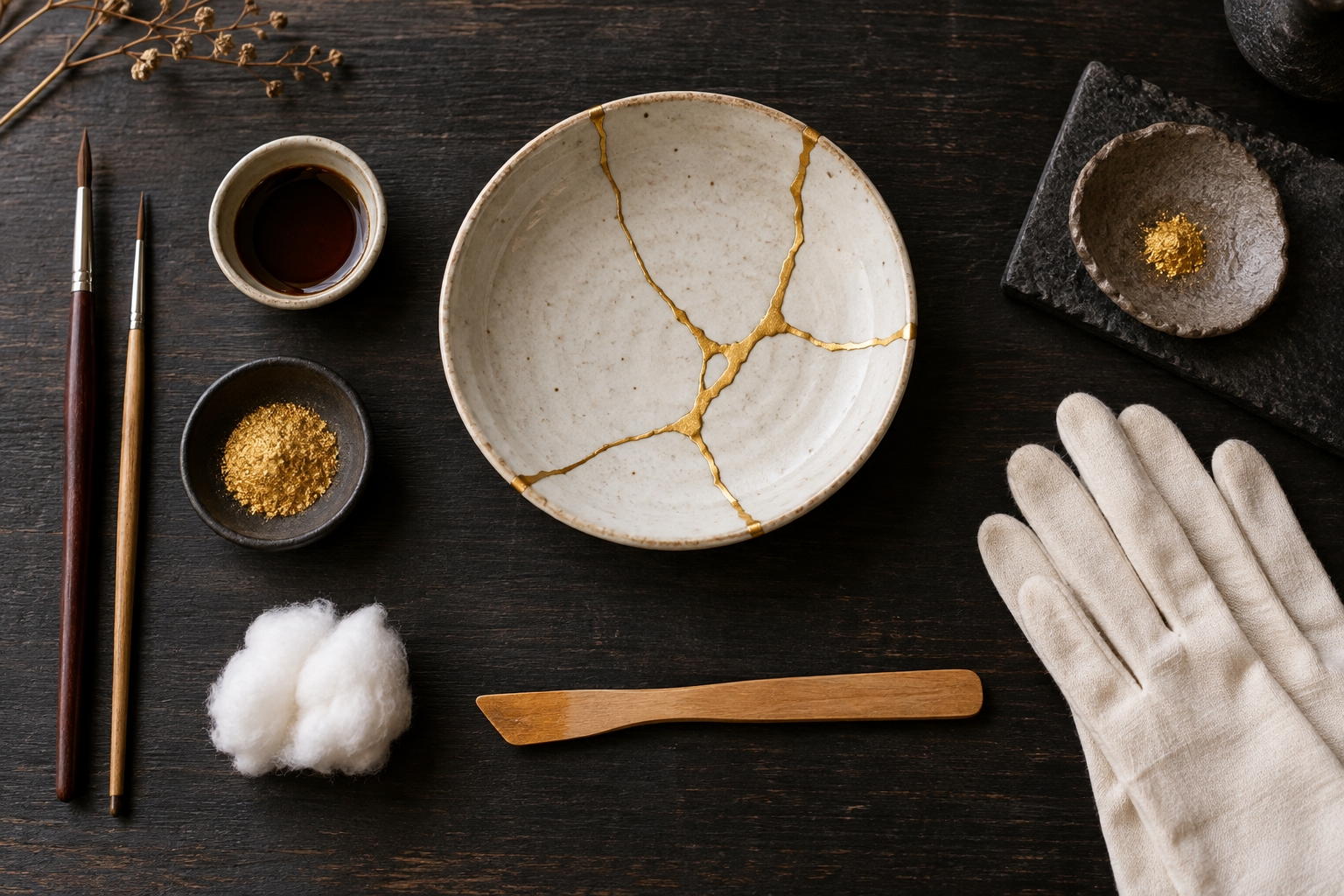
Traditional kintsugi uses natural Japanese lacquer—urushi—through a layered process, then decorates the finished seam with metal powder. Many modern kits use epoxy or another resin with gold-colored pigment. Modern kits can be useful, but they should not be presented as identical to the traditional craft.
Traditional urushi kintsugi
Urushi is made from lacquer-tree sap. It can act as both an adhesive and a durable coating. A traditional repair is built in stages: joining, filling, refining, coating and finishing. Each layer needs suitable curing conditions and time.
- Best for: learning the material tradition and repairing a valued object with patience.
- Time: commonly weeks rather than hours.
- Handling: uncured urushi can irritate skin, so protective equipment and careful instructions matter.
- Finish: the final powder may be real gold, silver or another material; check the kit specification.
Epoxy-style decorative repair
A simplified kit often joins the ceramic with a two-part adhesive and produces the gold effect with mica or another pigment. It is quicker and usually less expensive. It can be an accessible first craft project for a display object.
Alternative-resin kits
Some products sit between the two categories, using plant-derived or synthetic resins. The label alone does not tell you the curing method, durability or appropriate use. Read the actual material list and instructions.
Which one should a beginner choose?
Choose by purpose. For a first decorative experiment, a clearly documented quick-curing kit may be enough. For learning the traditional process, look specifically for natural urushi, detailed handling guidance and a realistic curing schedule. For functional tableware, rely only on explicit use guidance from the manufacturer.
Next: the beginner kit checklist →
Sources