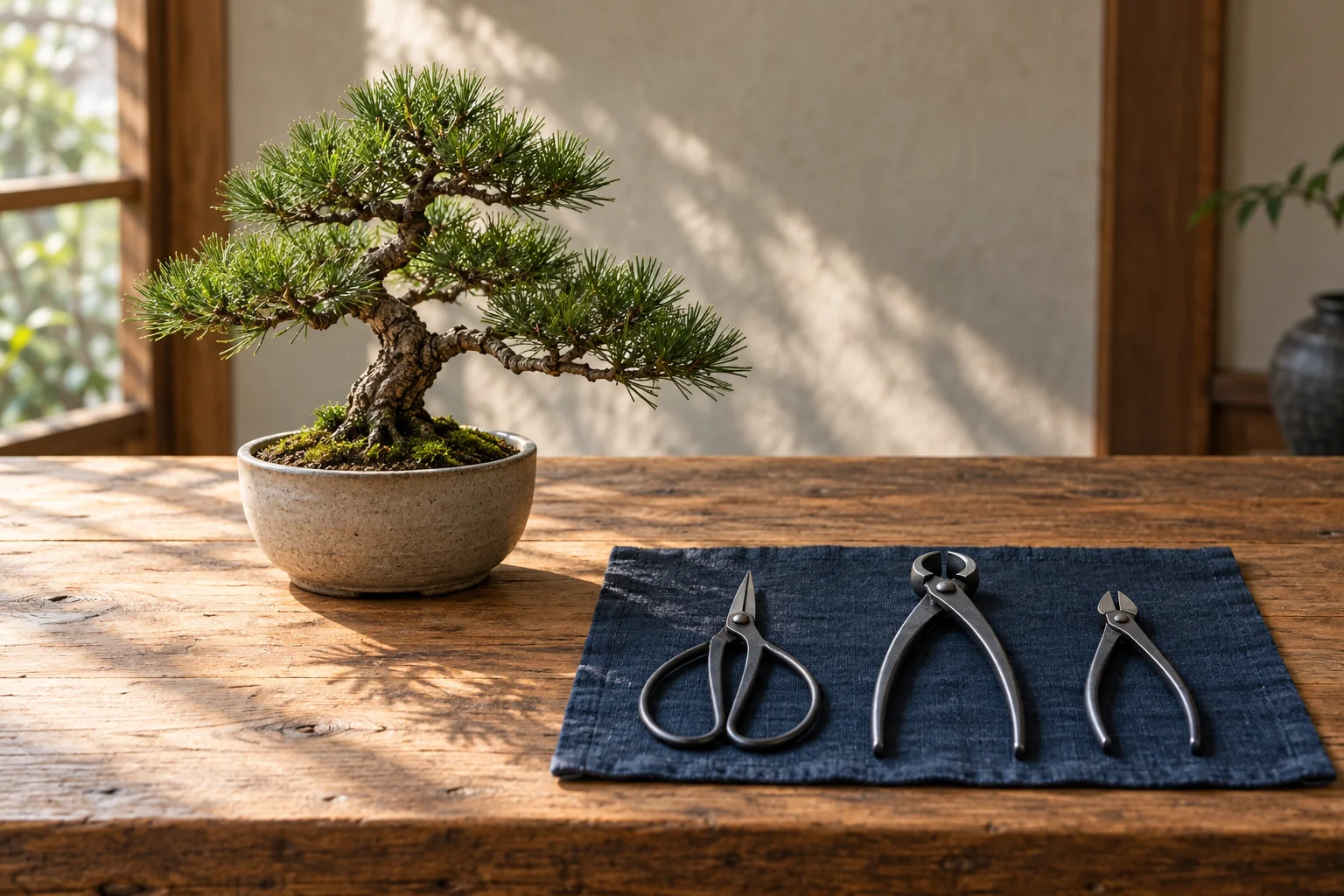
One job, one tool
Bonsai Empire's tool guide recommends starting with a basic quality shear and a concave cutter, and explains that bonsai tools are divided by the job they do. Specialist retailers such as American Bonsai sell scissors, concave cutters, knob cutters, and wire cutters as individual tools. That makes it practical to buy the one piece you are missing instead of a bundle that duplicates what you own.
Shopping paths — choose by the missing tool
Search for the one tool you need
Affiliate disclosure: As an Amazon Associate I earn from qualifying purchases.
 — search on Amazon, opens in a new tab
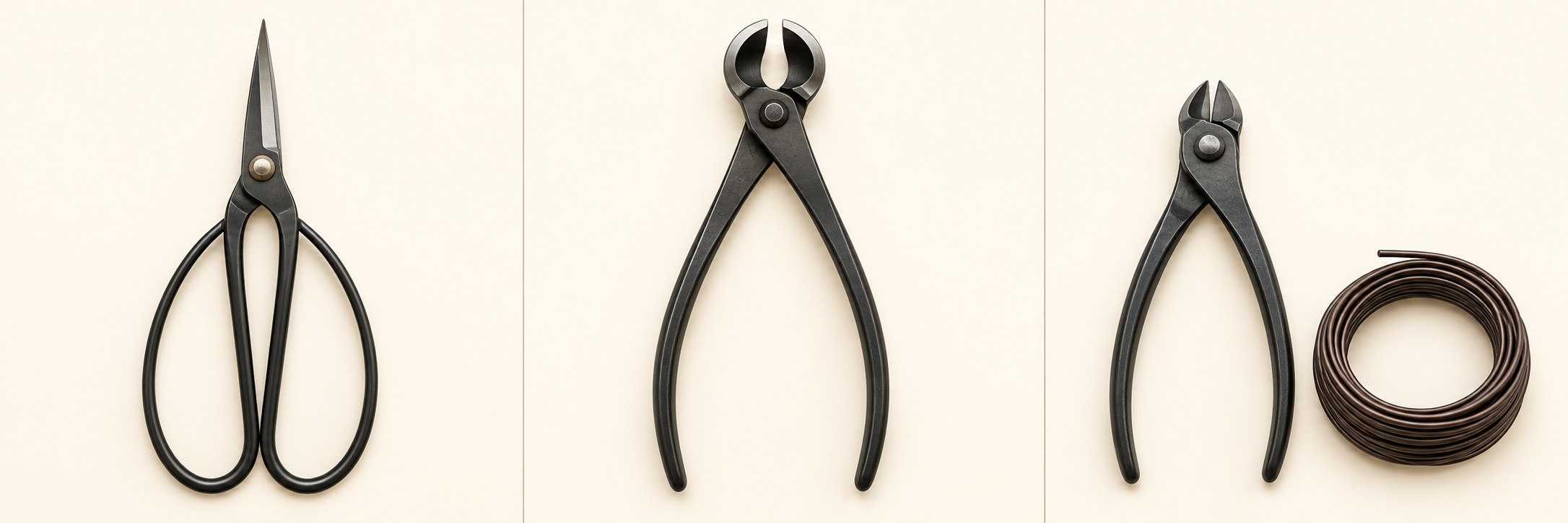
Bonsai pruning scissors
Slim blades with looped handles for trimming shoots, small twigs, and leaves. A pair for fine work is not a branch cutter.
Search bonsai scissors on Amazon — search on Amazon, opens in a new tabConcave cutter
Curved jaws that take a branch off close to the trunk. Check the overall length and the maker's capacity guidance.
Search concave cutters on Amazon — search on Amazon, opens in a new tabBonsai wire cutter
A short, blunt head for cutting training wire off a branch, so metal stays away from your pruning blades.
Search bonsai wire cutters on AmazonPictures are AI-generated shape examples, not photographs of specific products.
The links below are category searches, not tested product recommendations. Results include many makers, and listing titles do not confirm country of manufacture, steel, or cutting capacity. Check the current specifications, what is included, and the return policy before ordering.
Three tools, three jobs
Pruning scissors
For shoots, small twigs, and leaves.
Check: length, handle size, the maker's stated cutting range.
See the scissors shapeConcave cutter
For taking a branch off close to the trunk.
Check: overall length, jaw shape, capacity guidance.
See the concave cutter shapeWire cutter
For cutting training wire off a branch.
Check: wire gauge the maker lists, head shape.
See the wire cutter shapeFor shoots, leaves, and small twigs
Pruning scissors cover the routine trimming of shoots, small twigs, and leaves. Blade length and shape vary between models, so think about the size of the trees you keep and how tightly packed the growth is. Compare overall length and handle size against your hand, and read the maker's guidance on what the blades are intended to cut. A pair sold for fine work is not a branch cutter, even if it looks sturdy.
For removing a branch
A concave cutter is the other tool Bonsai Empire singles out. Its curved jaws are designed for removing a branch close to the trunk. Sizes vary, so match the cutter to the size of tree you keep and to the cutting capacity the maker states. Do not assume any single cutter can handle every branch on every tree.
A knob cutter is a related specialist tool that you will find sold separately. Treat it as a later addition once you know you need it, rather than a reason to buy a larger set.
For cutting training wire
If you wire branches, a dedicated wire cutter keeps that job off your pruning blades. Check the wire size the maker says the cutter is meant for, and use it for wire only. Pruning blades are made for living growth, not metal, so keep each tool to the use its maker describes.
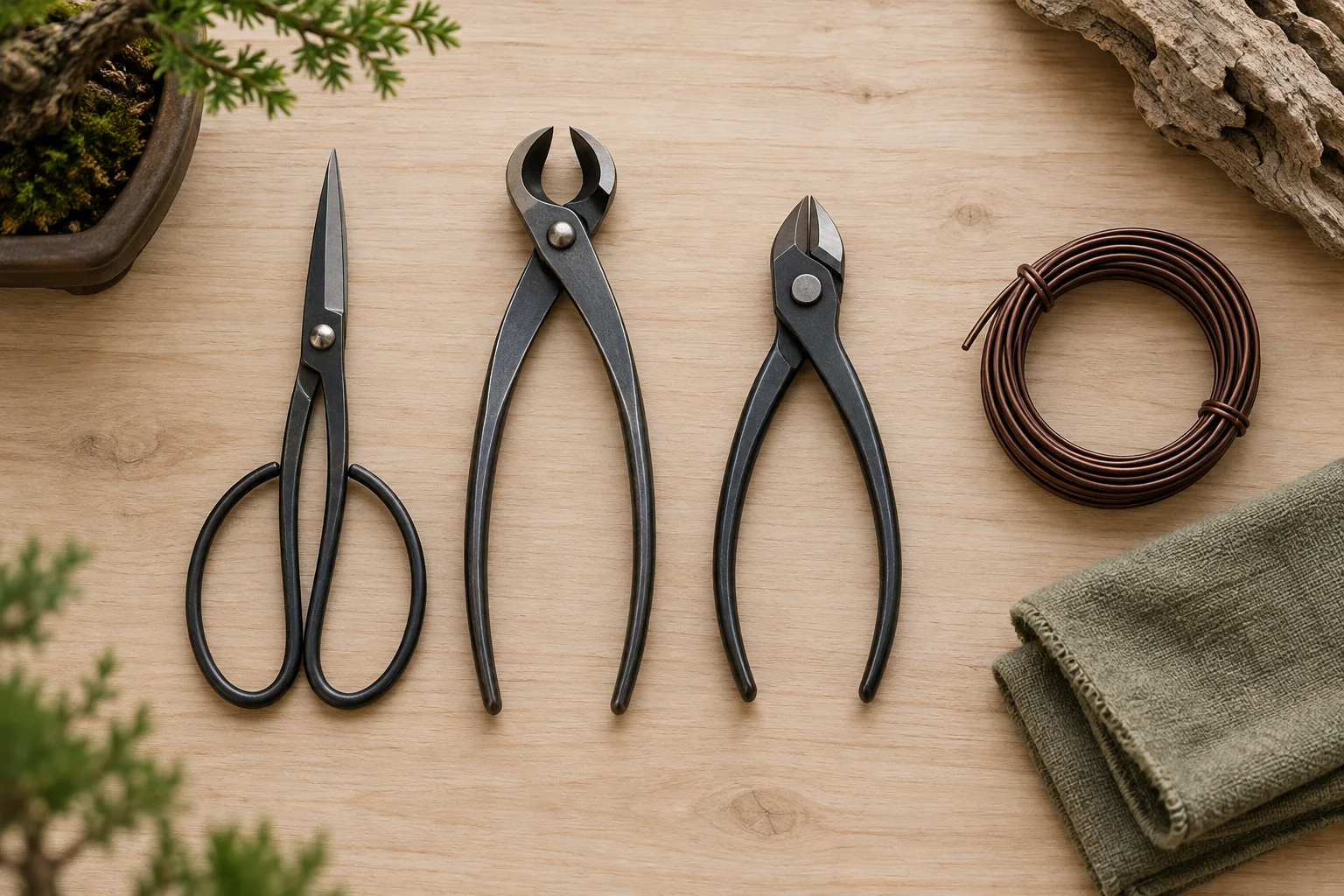
Adding to, replacing, or gifting a tool
Adding to a kit. List what you already own and the cut you could not make last time. That gap is your next purchase. A full set is reasonable only when you own nothing and its contents are listed clearly, piece by piece.
Replacing a tool. Note the length, jaw shape, and finish of the tool you are replacing so you can compare like with like. If the old tool was damaged by cutting past its capacity, choose a replacement whose stated capacity matches the work, or add the right specialist tool alongside it.
Giving a tool. Ask, or quietly check, what the person already has. A single well-described tool with a case or blade cover is usually a more useful gift than a set that repeats their existing pieces.
Japanese-made and Japanese-style are different claims
"Japanese," "Japan style," and "Japanese steel" in a listing title do not all mean the same thing, and none of them on its own confirms where a tool was made. If origin matters to you, look for the maker's name and the country of manufacture stated in the specifications, then confirm with the maker. If it does not, judge the tool on its stated dimensions, materials, and care instructions.
Storage and care follow the maker
Finishes and steels differ, so cleaning, drying, oiling, and sharpening routines should come from the maker's instructions for that tool. Keep blade covers or a tool roll on your checklist, both for storage and for safe handling. Check that a case or guard is actually included rather than shown only in a photo.
Back to the scissors, concave cutter, and wire cutter choices
Sources & method