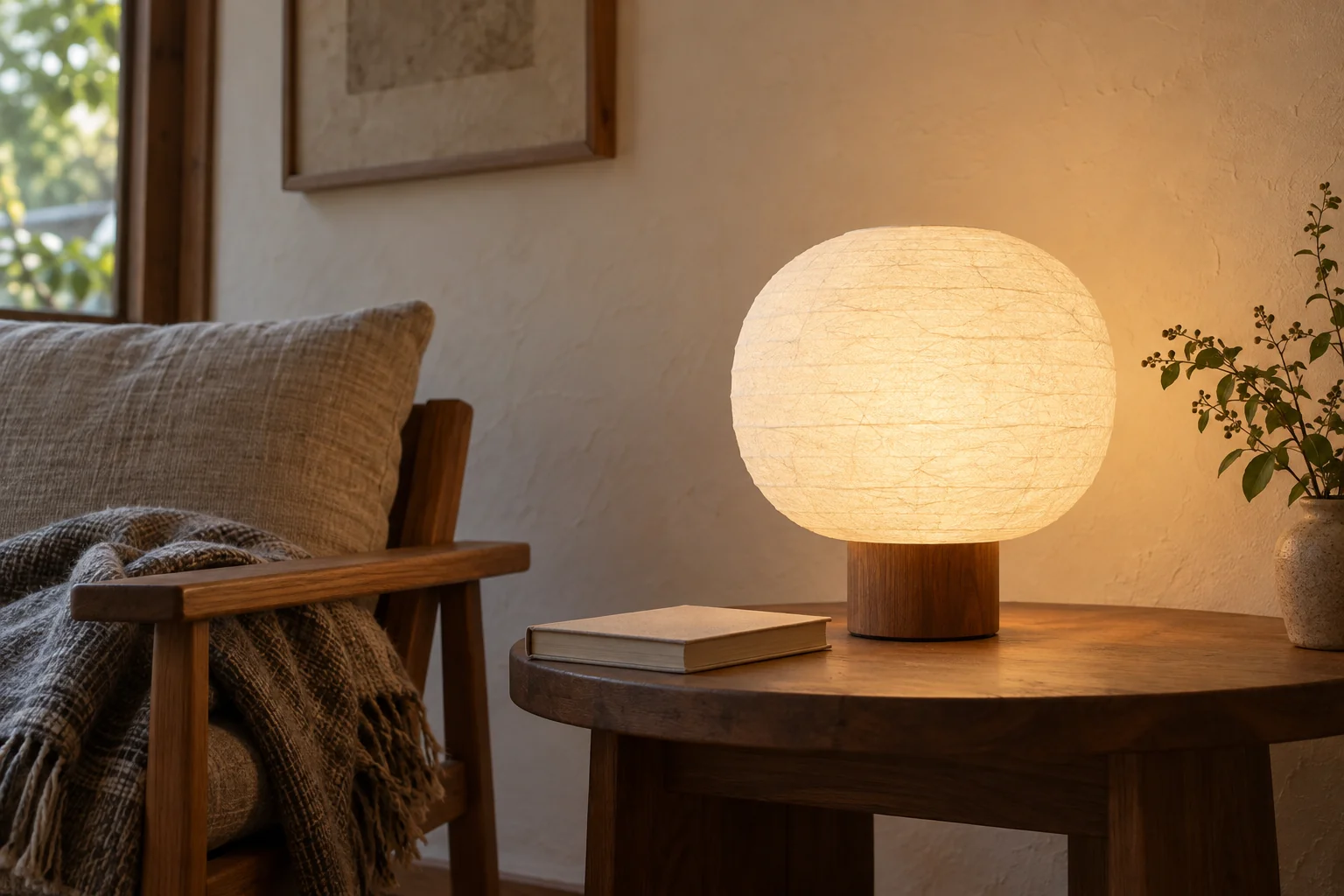
Start with the place, then the shade
Paper lamps are easy to fall for in a photograph and surprisingly easy to buy wrong. A shade that looks right on a wide shelf can crowd a nightstand; a pendant shade can arrive without any wiring at all. Decide where the light will live first, then compare shapes.
Shopping paths — choose by placement
Browse by where the light will go
Affiliate disclosure: As an Amazon Associate I earn from qualifying purchases.
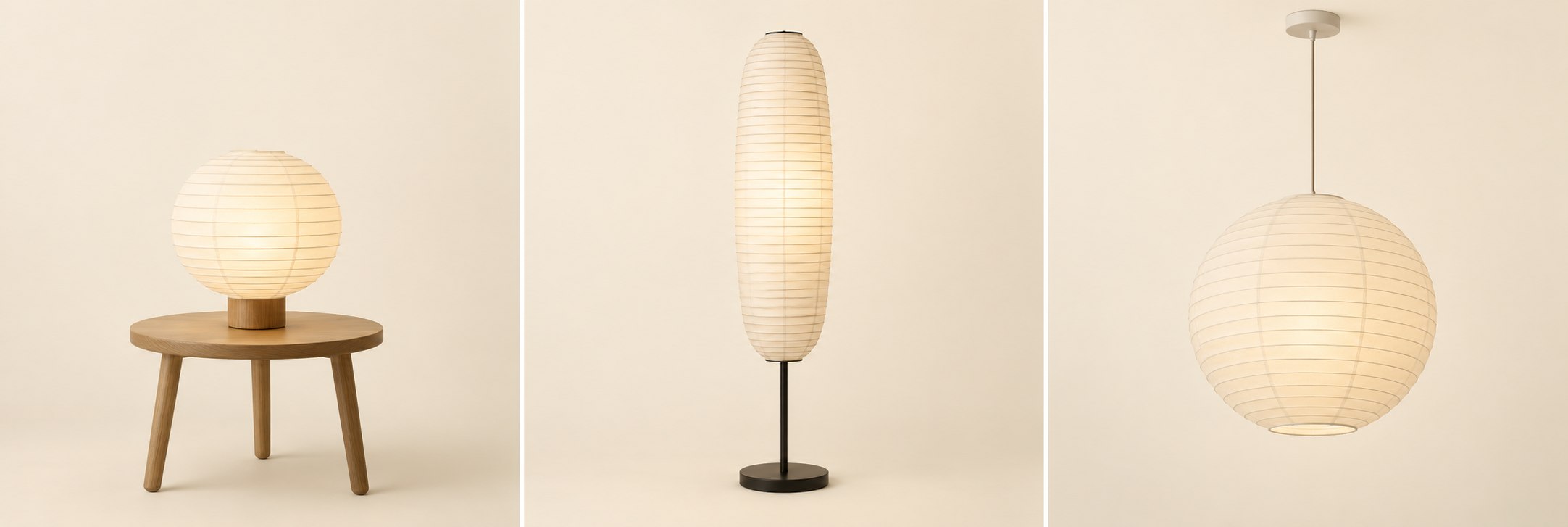 — search on Amazon, opens in a new tab
Paper table lamp
A short shade on a small base for a desk, nightstand, or shelf. Measure the base footprint and total height first.
Search paper table lamps on Amazon — search on Amazon, opens in a new tabPaper floor lamp
A tall shade on a standing base that lights a corner without using table space. Compare base width with overall height.
Search paper floor lamps on Amazon — search on Amazon, opens in a new tabPaper pendant shade
A shade that hangs from the ceiling. Often sold shade-only for a fixture you already have, so read what is included.
Search paper pendant shades on AmazonPictures are AI-generated shape examples, not photographs of specific products.
The links below are category searches, not tested product recommendations. Results mix many makers and styles, and a title can say "Japanese," "washi," or "Akari" without confirming any of them. Listings, sellers, and availability change, so check the current specifications before ordering.
Three formats, three different checks
Table lamp
Fits desks, side tables, and shelves.
Check first: base footprint, total height, cord length.
See the table lamp shapeFloor lamp
Adds a tall glow without using table space.
Check first: base width, stability, where the cord will run.
See the floor lamp shapePendant shade
Often sold to fit an existing fixture or cord set.
Check first: shade only or complete lamp, bulb base, wattage limit.
See the pendant shade shapeWhat "Akari" does and does not tell you
Many paper lamp listings borrow the look of Akari Light Sculptures. According to the Isamu Noguchi Foundation and Garden Museum's shop, Akari is a design series that Isamu Noguchi began in 1951, handmade by its original manufacturer in Gifu, Japan. Vitra, which also sells the series, describes it as a design of paper and light rooted in Gifu's lantern craft.
That history matters, but it does not transfer to every round paper shade. A generic paper lamp is not an Akari and is not a Noguchi product, even when its title uses those words. A marketplace title alone also cannot confirm that a shade is made in Japan, uses washi, or is an official licensed design. If those points matter to you, look for the maker's name and place of manufacture on the listing and confirm them with the maker. If you simply want the soft, diffused look, a clearly described paper-style lamp can be an honest choice.
For a desk or side table
Measure the surface before you browse. Note the depth and width you can give the base, and the height under any shelf above it. A wide globe shade can overhang a small table and become easy to knock. Look for the listing's full dimensions, including the shade diameter, not only the base.
Then trace the cord. Where is the nearest outlet, and does the listed cord length reach it without crossing a walkway? A switch on the cord or on the base is a convenience question worth settling before you order.
For an open floor corner
Floor lamps are tall and light, which is part of their appeal and part of the risk. Compare the base width with the overall height, and prefer listings that clearly describe how the base is weighted or secured. Think about the corner itself: is it out of the main path, away from doors that swing, and close enough to an outlet that the cord does not cross the room?
Replacing a pendant or ceiling shade
This is where listings differ most. Some are shade only: a paper form meant to fit over a fixture or cord set you already own. Others are complete lamps with a cord, socket, and sometimes a plug-in canopy. Read the "what's included" section before anything else.
If you are fitting a shade to existing hardware, check that the opening and fitting suit your fixture, and that the bulb you plan to use matches the base type and stays within the maximum wattage the maker states. If you want to use a dimmer, look for an explicit statement that the lamp and bulb are dimmer-compatible rather than assuming it. Any hardwired installation should follow the maker's instructions and local electrical rules; when in doubt, ask a qualified electrician.
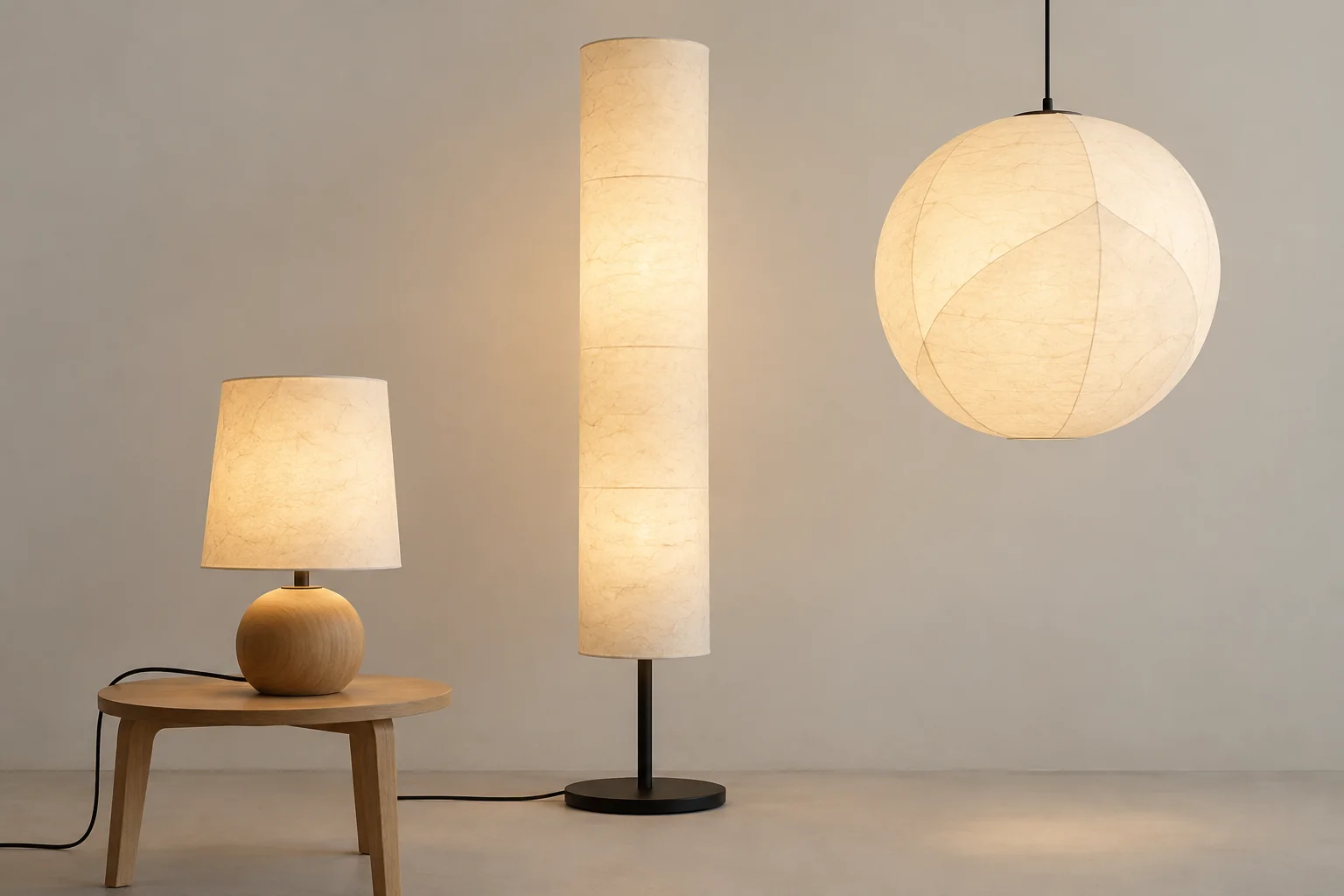
A short spec checklist before you order
- Overall height, shade diameter, and base footprint against your measurements.
- Shade only or complete lamp, and exactly which parts are included.
- Cord length, switch type, and plug type for the home where it will be used.
- Bulb base type and the maximum wattage the maker lists.
- Whether dimming is explicitly supported.
- Any electrical safety certification, as stated on the current listing or by the maker.
- Maker name, place of manufacture, and shade material, if origin matters to you.
Choosing a paper lamp as a gift
A lamp is a gift for someone's room, so the measurements belong to them, not you. A table lamp is usually the easier choice because it needs no installation and only a surface and an outlet. Avoid a shade-only pendant unless you know their fixture. Check the box contents, how well the listing describes packaging, and the return window, since paper shades can arrive creased or dented.
Care is set by the maker
Paper shades are delicate, and products vary in material and construction. Follow the individual maker's care and electrical instructions for cleaning, bulb choice, and placement rather than general tips. This guide does not suggest wetting the shade or placing it near a heat source.
Back to the table, floor, and pendant choices
Sources & method