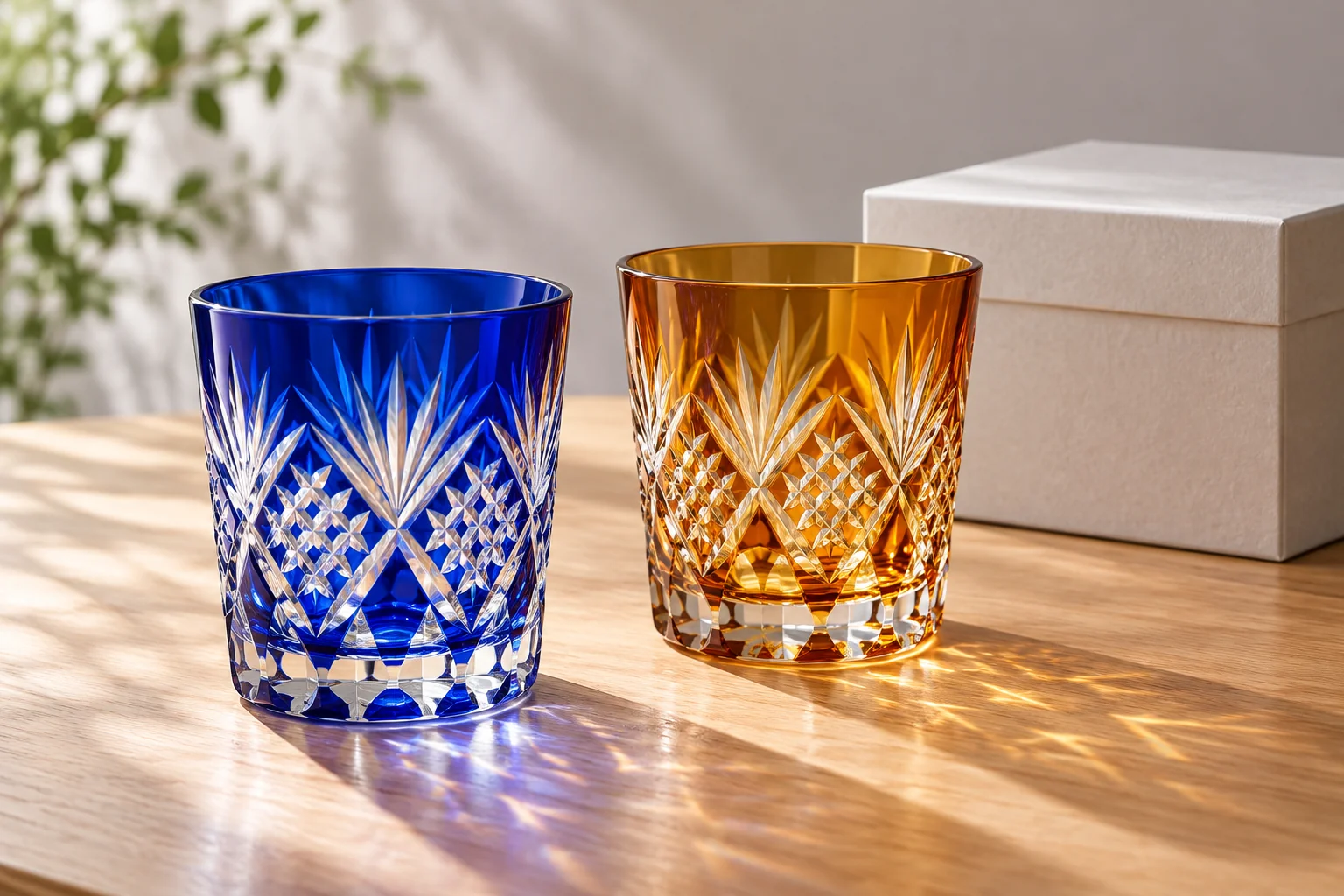
A finished object, not a starter kit
Unlike many craft purchases, a cut glass is complete the moment it arrives. That makes the decision simpler in one way and harder in another: there is no setup to plan, but the name on the listing carries more weight than it should.
Shopping paths — choose by use
Browse by what you will drink
Affiliate disclosure: As an Amazon Associate I earn from qualifying purchases.
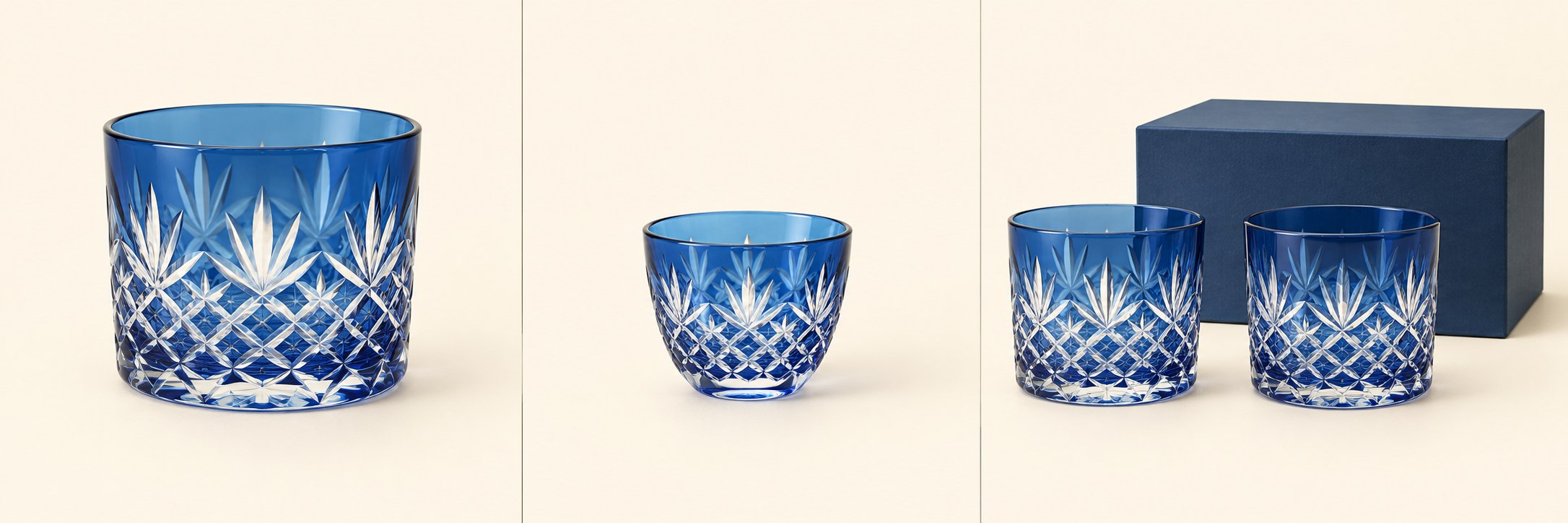 — search on Amazon, opens in a new tab
Cut glass tumbler
A straight-sided single glass for water or other drinks. Compare capacity, rim diameter, and weight.
Search Japanese cut glass tumblers on Amazon — search on Amazon, opens in a new tabGlass sake cup
A small, low cup for sake or tasting portions. Check capacity and whether it is sold singly or as a set.
Search Japanese glass sake cups on Amazon — search on Amazon, opens in a new tabBoxed gift pair
Two glasses packed together in a box. Check the box, packing, and the breakage and return terms.
Search cut glass gift pairs on AmazonPictures are AI-generated shape examples, not photographs of specific products.
The links below are category searches, not tested product recommendations. Results include kiriko-inspired and imitation products alongside others, and no listing in these searches has been verified as authentic Edo Kiriko. Check the maker, place of manufacture, capacity, and return terms on the current listing before ordering.
Shopping by the name instead of the shape
Kiriko glass
A search on the word "kiriko" returns many shapes and makers. Read the label section below before relying on the name.
Search kiriko glass on AmazonThree common choices
Tumbler
A versatile single glass for water or other drinks.
Check: capacity, rim diameter, weight.
See the tumbler shapeSake cup
A small cup for sake or tasting portions.
Check: capacity and whether it is sold singly or as a set.
See the sake cup shapeGift pair
Two glasses, often boxed together.
Check: box, packing, return and breakage terms.
See the gift pairWhat an "Edo Kiriko" label does and does not confirm
The Edo Kiriko Cooperative Association explains in its English guidance that "Edo Kiriko" is the cooperative's registered trademark, and it warns buyers to watch for imitations that are not handmade in Japan. That is the key point for anyone shopping online: a listing title using the words "Edo Kiriko," "Kiriko," or "Japanese" does not by itself confirm that the glass is authentic Edo Kiriko or made in Japan.
Price is not evidence either. A high price does not prove authenticity, and a low price does not prove imitation. Instead, look on the listing for the maker's name and the place of manufacture. If there is a certificate, note exactly what it names, then confirm those details with the maker or the cooperative.
Category search results will include glasses described as "kiriko-style" or "inspired." These can be honest choices if you want the look and the listing is clear about what it is. The problem is only a product that implies more than it states.
Choosing one glass for yourself
Start with what you will drink and how you like to hold a glass. Then compare:
- Capacity. The listed volume tells you more than the photo, which rarely shows scale.
- Rim diameter and height. A wider rim and a shorter glass feel different in the hand from a narrow, tall one.
- Weight. If the listing gives it, use it to compare glasses of similar size.
- Intended use. Read what the maker says the glass is for rather than assuming from its shape.
Choosing a gift pair
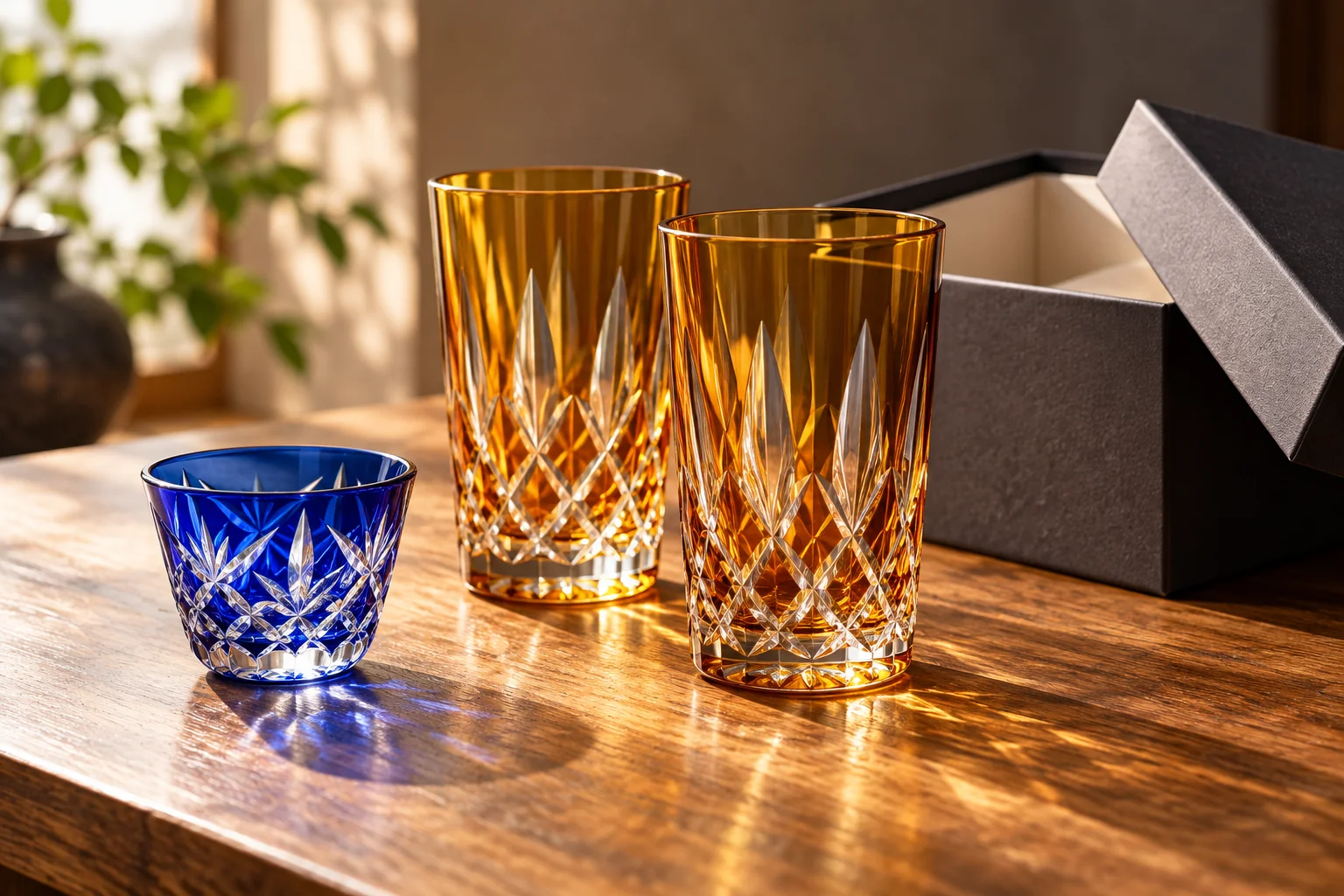
For a gift, presentation and delivery matter as much as the pattern. Check whether a box is included and what it looks like, how the listing describes packing, and the seller's return terms. Look specifically for what happens if a glass arrives broken: who to contact, what proof is needed, and the time limit. If the recipient will care about origin, choose a listing where the maker and place of manufacture are stated, so the gift does not rest on a title alone.
Replacing a broken glass
To replace one glass in a set, start from the original: the maker's name, the pattern or product name, the color, and the capacity. Glasses from other makers can look similar in photos but differ in size, cut, and color. If you cannot find the same product, buying a new matched pair can be a better result than a near-match single.
Care follows the maker's guidance
Do not assume a cut glass is dishwasher-safe or suitable for hot drinks. Those details depend on the specific glass, and only the maker's care guidance can answer them. Questions about materials or food-contact rules should also go to the maker or seller rather than being inferred from a listing.
Back to the tumbler, sake cup, and gift pair choices
Sources & method