Choose by use, not by the size of the set
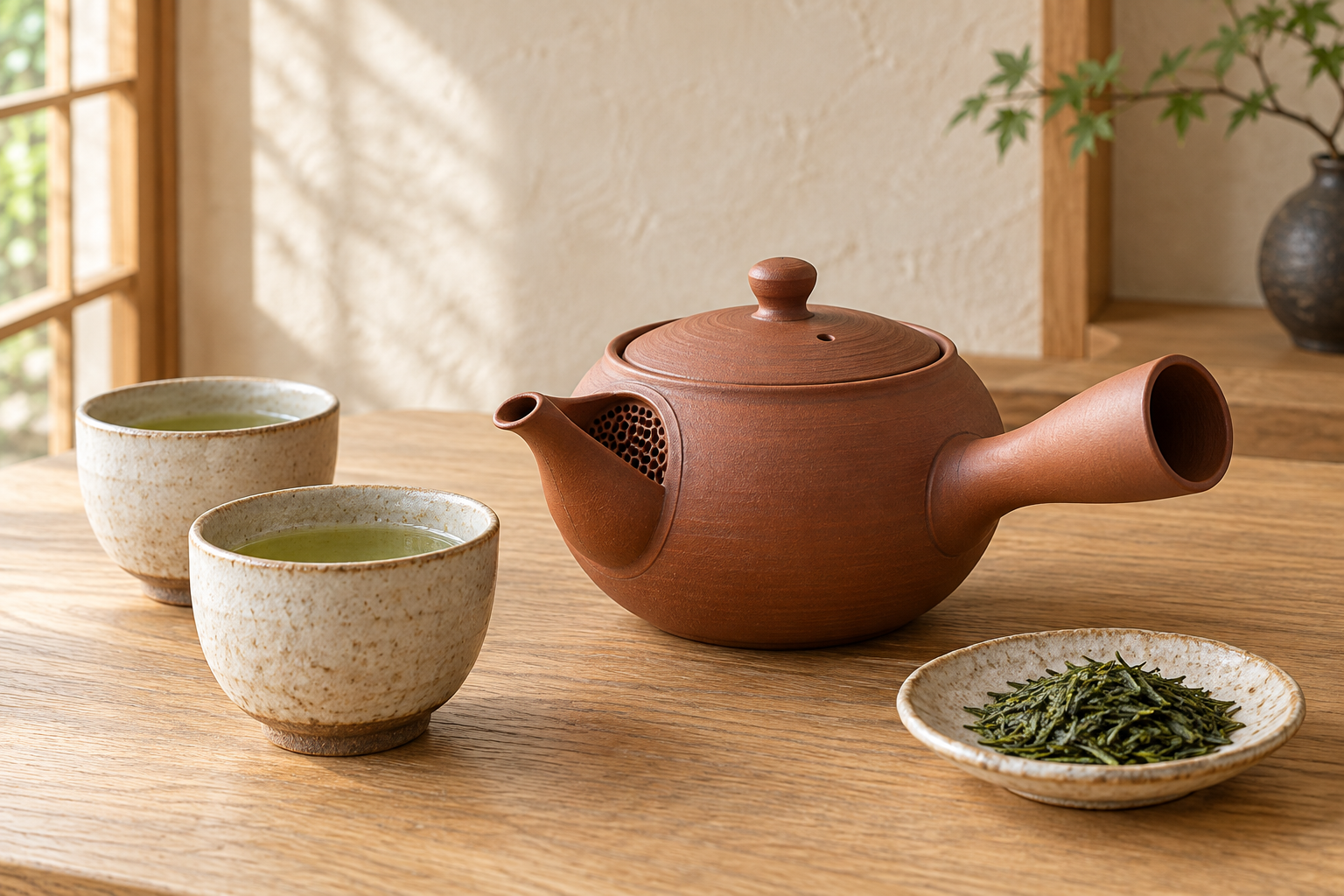
A kyusu is a Japanese teapot commonly used for sencha and other loose-leaf Japanese teas. The familiar yokode form places the handle at a right angle to the spout, allowing a small pot to pour with a light turn of the wrist. Global Japanese Tea Association notes that kyusu commonly range from about 150 to 450 mL, while Japanese teacups are often much smaller than Western mugs.
That means the best first pot is not automatically the largest one. A large teapot filled only halfway can leave leaves crowded away from the water or encourage you to use more water than the tea needs. Begin with the total amount you actually pour at one time.
1. Match capacity to the cups you use
About 150–200 mL
A compact pot suits one modest cup, small tasting portions, or teas prepared with less water. Check the listed usable capacity rather than judging from photographs.
About 250–350 mL
A practical range for two smaller yunomi or one generous serving. This is often the easiest starting point for everyday sencha.
About 400 mL and up
Useful for multiple drinkers or larger cups, especially with casual teas. Confirm that the handle and filled weight remain comfortable.
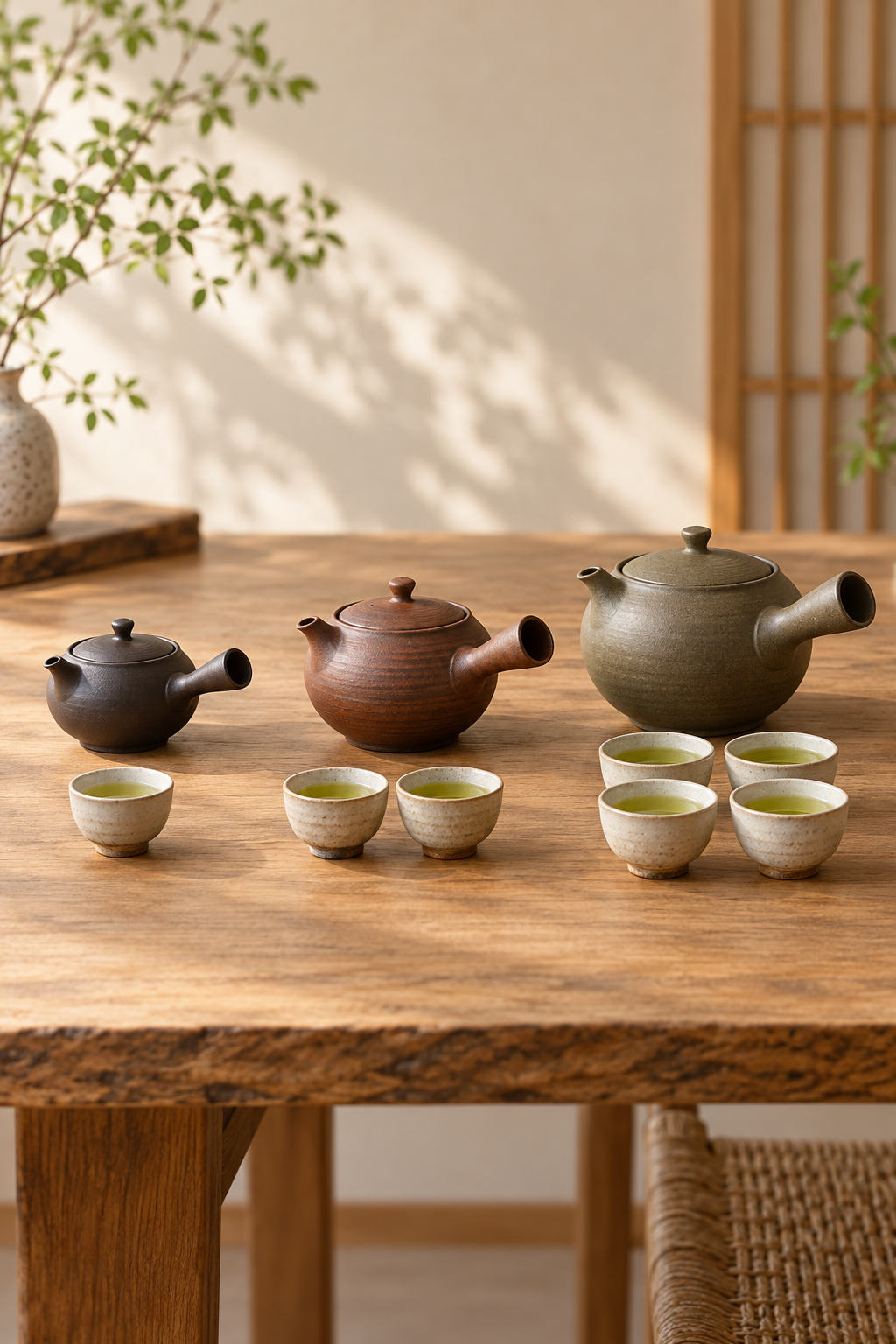
This visual turns the listed milliliters into a serving-size check. It is an editorial illustration, not a product-size guarantee; use the seller’s stated usable capacity before buying.
2. Choose the filter for the leaves
Fine or broken leaves can pass through a coarse opening and can also clog a small outlet. A built-in ceramic mesh, often described as sasame or ceramesh, keeps the inside open and gives leaves room to move. A removable stainless basket is easier to lift out and clean, and it can be practical for larger leaves, but a narrow basket may restrict expansion.
- For fine-steamed sencha, look closely at the filter area and the number of openings.
- For larger-leaf teas, a removable basket can be convenient if it is broad enough.
- Listings should show the inside of the pot; do not assume filter type from the exterior.
- A clean pour matters as much as the filter material. Reviews can help identify dripping, but they are not a substitute for the maker’s dimensions and care instructions.
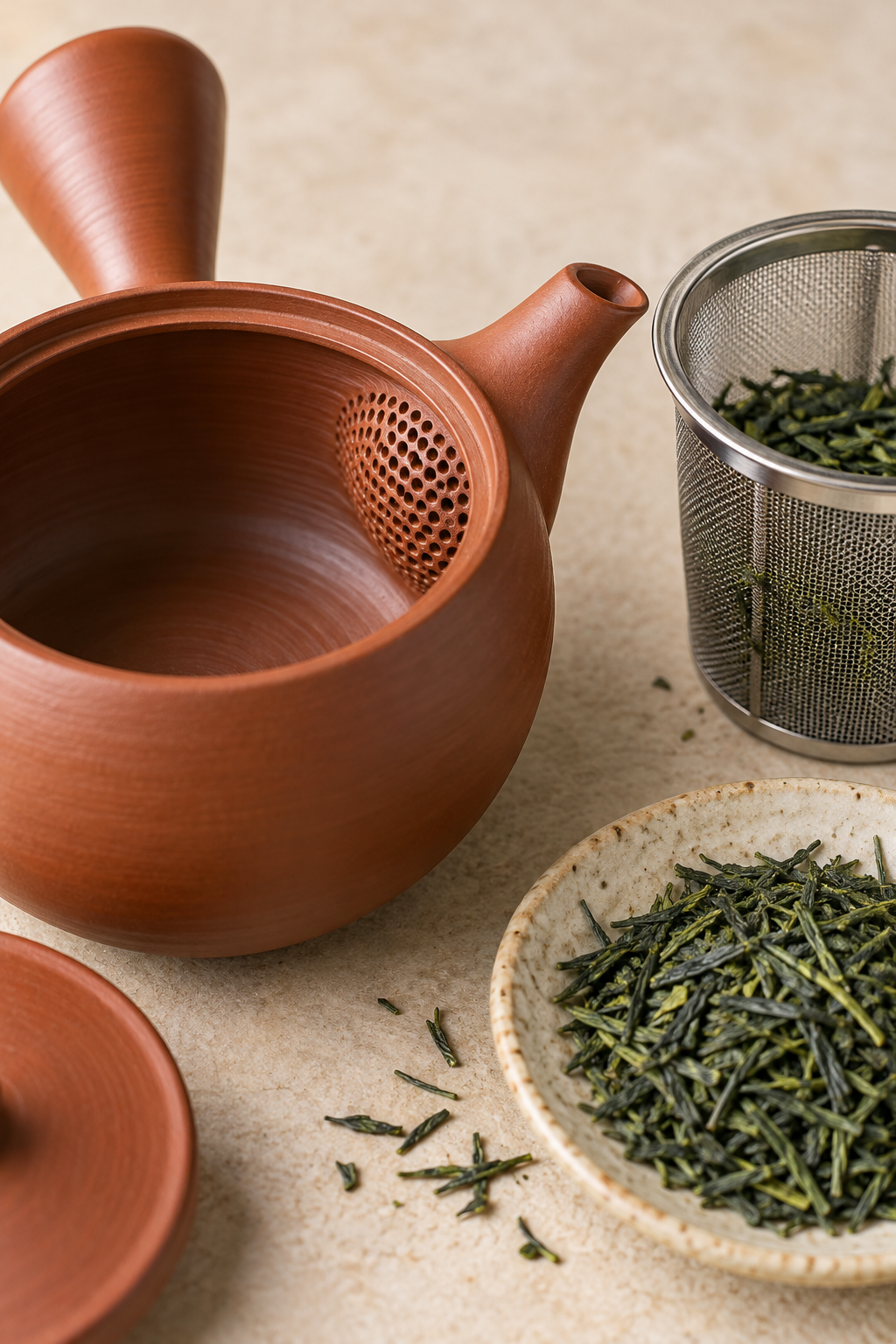
The key difference is the space available for leaves, not whether one filter material always wins. Match the opening pattern and basket width to the tea you brew.
3. Clay, porcelain, or glass?
Unglazed clay
Tokoname and Banko are well-known Japanese teaware traditions. Unglazed surfaces require gentle care and are a good fit when you expect to brew similar teas regularly.
Glazed ceramic or porcelain
A nonporous interior is easier when you rotate among different teas. Verify whether the maker permits detergent or dishwasher use; material alone does not guarantee it.
Heat-safe glass
Glass lets a beginner watch leaves open and is neutral between tea types. Check thermal-use instructions, filter design, and replacement-part availability.
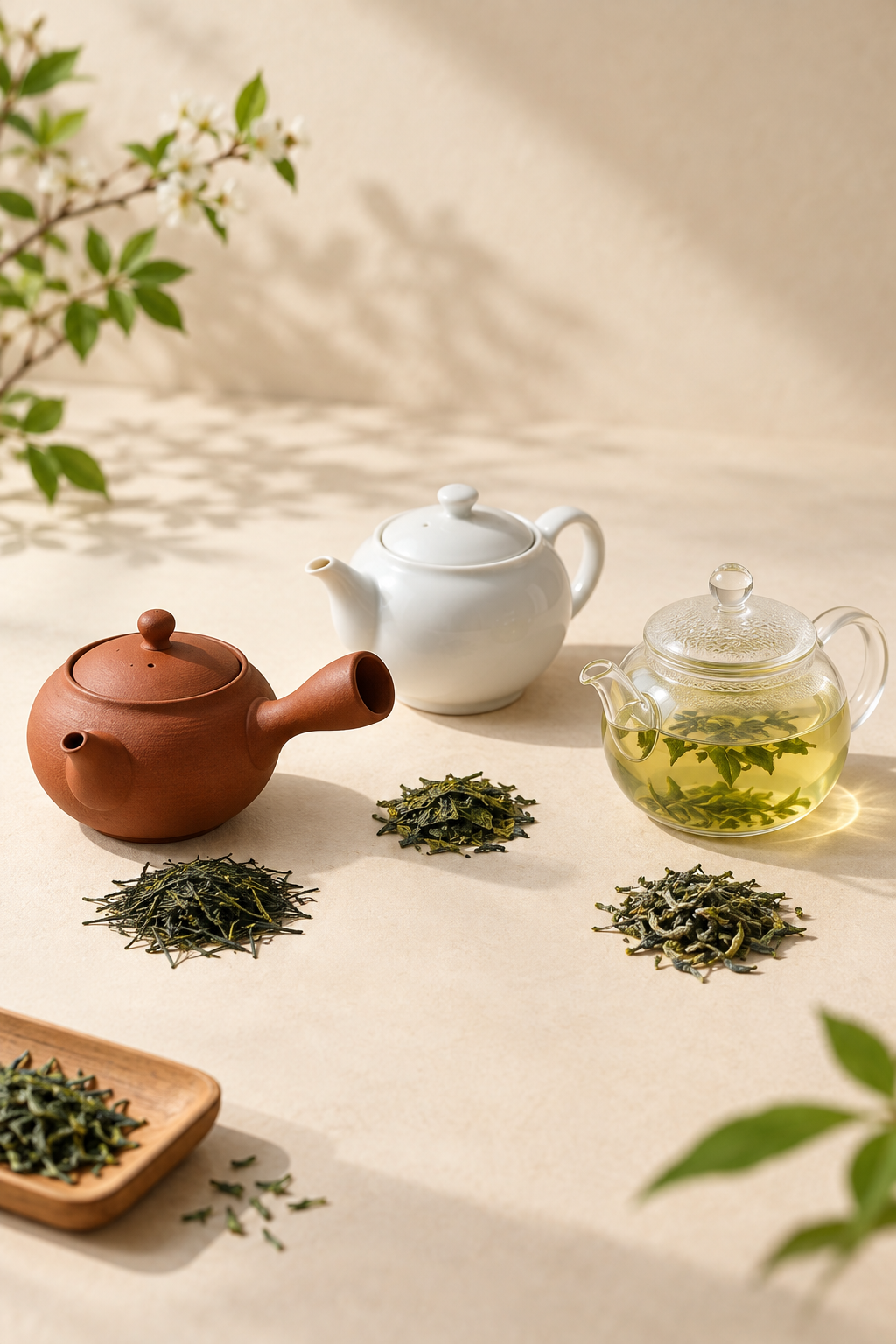
Clay suits a focused tea habit, porcelain makes rotation simpler, and glass makes the infusion visible. Care instructions and heat limits still come from the maker.
4. Check the handle before the decoration
A side-handle yokode kyusu is optimized for one-handed pouring and is commonly made for right-handed use. A rear-handle ushirode pot feels more familiar to many Western tea drinkers and can work better for left-handed users or larger capacities. Handleless hohin and shiboridashi vessels are valuable forms, but they are not automatically the simplest first purchase.
What a beginner can skip
- A large matching set when you only need one pot and one or two cups.
- A “Japanese-style” listing that omits capacity, filter photographs, material, or country of origin.
- Claims that one clay is universally best for every tea.
- Decorative extras that do not improve pouring, leaf expansion, cleaning, or storage.
Amazon shopping paths — included from the first draft
Compare the construction, not just the look
These links open current Amazon US search results. They are category searches rather than hands-on endorsements. Prices, sellers, origin claims, and availability can change; verify the current listing, dimensions, filter, and care guidance before ordering.
Tokoname-style kyusu
Browse clay kyusu on AmazonPorcelain kyusu
Browse porcelain kyusu on AmazonGlass Japanese teapot
Browse glass teapots on AmazonAffiliate disclosure: As an Amazon Associate I earn from qualifying purchases. These are category search links, not hands-on product endorsements.
A practical first-use routine
- Warm or cool your water for the tea you are brewing; Japanese green teas are not all prepared at the same temperature.
- Add leaves according to the tea maker’s guidance.
- Pour evenly between cups in small passes so the strength stays balanced.
- Empty the pot fully after the infusion, then follow the pot maker’s cleaning and drying instructions.
Sources & method